

Can ultrasonic molten metal atomizers produce spherical metal powders?
Can ultrasonic molten metal atomizers produce spherical metal powders?
Hey there! I'm a supplier of Ultrasonic Molten Metal Atomizers, and today I wanna chat about whether these cool machines can produce spherical metal powders.
First off, let's understand what ultrasonic molten metal atomizers are. Ultrasonic Molten Metal Atomizers, as the name suggests, use ultrasonic technology to atomize molten metal. You can check out more about them here: Ultrasonic Molten Metal Atomizers. These atomizers work by subjecting the molten metal to high - frequency ultrasonic vibrations. When the molten metal is exposed to these vibrations, it breaks up into tiny droplets.
Now, the question of whether they can produce spherical metal powders. Spherical metal powders are highly desirable in many industries. They have better flowability, which is crucial for applications like 3D printing. In 3D printing, the powder needs to spread evenly to create high - quality prints. Also, in powder metallurgy, spherical powders can pack more densely, leading to stronger and more uniform parts.
The process of ultrasonic atomization has some characteristics that are conducive to producing spherical powders. When the molten metal is atomized by ultrasonic waves, the surface tension of the metal droplets plays a big role. Surface tension tends to pull the droplets into a spherical shape. As the molten metal is broken into small droplets by the ultrasonic vibrations, these droplets quickly solidify. And during this solidification process, the surface tension forces the droplets to take on a spherical form.
However, it's not always a guaranteed outcome. There are several factors that can affect the sphericity of the metal powders produced. One of the key factors is the viscosity of the molten metal. If the molten metal is too viscous, it may not break up into perfectly spherical droplets. Instead, the droplets might have irregular shapes. For example, in some high - alloy metals, the complex chemical composition can increase the viscosity, making it more challenging to achieve perfect spherical powders.
Another factor is the cooling rate. If the cooling rate is too fast, the droplets may not have enough time to fully form into spheres. On the other hand, if the cooling rate is too slow, the droplets may start to deform before solidification. So, finding the right balance is crucial.
We also have to consider the power and frequency of the ultrasonic waves. The power of the ultrasonic waves determines how effectively the molten metal is broken up. If the power is too low, the metal may not be atomized properly, resulting in larger and more irregular particles. The frequency of the ultrasonic waves can also influence the size and shape of the droplets. Different frequencies can cause the molten metal to break up in different ways.
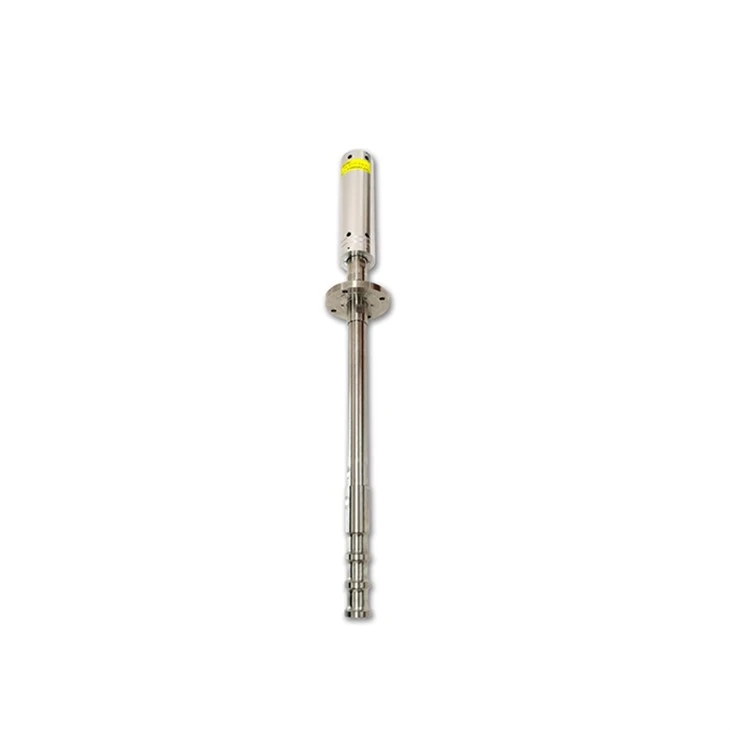

Our Ultrasonic Molten Metal Atomizers are designed to address these challenges. We've done a lot of research and development to optimize the power and frequency settings for different types of metals. And we're constantly improving our technology to ensure that we can produce high - quality spherical metal powders.
In addition to producing spherical metal powders, our Ultrasonic Molten Metal Atomizers have other applications. For example, we also offer Ultrasonic Aluminum Liquid Melt Equipment. This equipment uses ultrasonic technology to improve the quality of aluminum liquid melts. Ultrasonic waves can help to degas the molten aluminum, remove impurities, and refine the grain structure, resulting in better - quality aluminum products.
Another related technology is Metallurgical Metal Solution Degassing Ultrasonic Technology. This technology is used to remove dissolved gases from metal solutions. By using ultrasonic waves, we can create cavitation bubbles in the metal solution. These bubbles grow and collapse, which helps to release the dissolved gases. This is very important for improving the quality of metal products, as the presence of gases can cause defects in the final products.
So, to answer the question, yes, ultrasonic molten metal atomizers can produce spherical metal powders. But it requires careful control of various factors such as viscosity, cooling rate, power, and frequency. Our company is committed to providing high - quality Ultrasonic Molten Metal Atomizers that can meet the needs of different industries.
If you're interested in our products and want to learn more about how our ultrasonic molten metal atomizers can help you produce spherical metal powders or improve the quality of your metal products, don't hesitate to get in touch with us. We're always ready to have a chat and discuss your specific requirements.
References:
- Smith, J. (2018). Advances in Ultrasonic Atomization Technology. Journal of Metallurgical Engineering, 12(3), 45 - 56.
- Johnson, R. (2019). The Role of Surface Tension in Metal Powder Atomization. Powder Metallurgy Review, 20(2), 78 - 85.
- Brown, A. (2020). Ultrasonic Degassing in Metallurgy. International Journal of Metal Processing, 15(4), 112 - 125.