


Ultrasonic Components
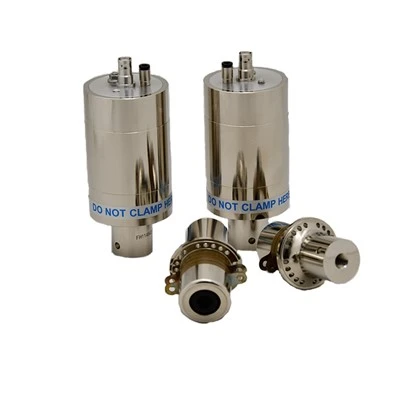
Ultrasonic piezoelectric ceramic transducer is an energy conversion device. Its function is to convert input power into mechanical power (i.e. ultrasound) and then transmit it, while its power consumption is very low. Ultrasonic transducer is a device that produces sound beyond the range of human hearing, typically starting at 20 kHz, also known as ultrasonic vibration.
The ultrasonic generator converts 110VAC or 220VAC power current into high-frequency current and transmits it to the piezoelectric ceramic. Piezoelectric ceramics resonate at ultrasonic frequencies. The piezoelectric effect of materials converts electrical signals into linear mechanical vibrations. Then amplify (reduce) the amplitude through an ultrasonic horn, and finally transmit it to the tool head for operation.




Why Choose Us?
Application Areas
Ultrasound has a wide range of applications across various fields. Different frequencies and power levels are suited for specific uses, and each application benefits from these variations, making ultrasound a versatile tool in many industries.
Sales Market
Our products are sold in many countries, including the United States, Canada, Russia, South Korea, Indonesia, Colombia, Germany, Poland, South Africa, the Netherlands, Hungary, France, Vietnam, Bulgaria, the United Kingdom, Mexico, and the United Arab Emirates and so on. Our main customers are agents experienced in ultrasound technology and end users.
Our Products
FUNSONIC specializes in developing and manufacturing ultrasonic equipment. Our product line includes ultrasonic spray coating machines, ultrasonic nozzle spray shaping machines, ultrasonic welding equipment, ultrasonic cutting equipment, and ultrasonic liquid processing equipment. We also offer a variety of ultrasonic core components.
Our Team
Hangzhou FUNSONIC Ultrasonic Company was founded in 2018, led by multiple experts with over 10 years of practical experience in the field of high-power ultrasonic. The team members are mainly born in the 1980s and 1990s, all of whom have a college degree or above. Has strong competitiveness and challenge, used for innovation, responsibility, and accountability.
What is Ultrasonic Digital Generator?
A ultrasonic digital generator is a device that generates ultrasonic waves through electrical energy to be used in various applications such as cleaning, welding, and cutting. These generators use advanced digital technology to provide precise control and adjustable frequency settings for better efficiency and performance.
Advantages of Ultrasonic Digital Generator
Versatility
One of the key advantages of a ultrasonic digital generator is its versatility. This device can be used in various industrial applications, such as welding, cutting, cleaning, and bonding. The ability to adapt to different processes makes it a valuable tool for manufacturers.
Precise Control
Another advantage is the precise control that the digital generator offers. With adjustable parameters like frequency and power level, users have complete control over the ultrasonic process. This results in consistent and high-quality output.
Efficient Energy Consumption
Ultrasonic digital generators are designed with energy efficiency in mind. They provide optimal performance while minimizing energy consumption, making them cost-effective for businesses.
Improved Safety
These generators come equipped with advanced safety features such as overload protection and short circuit prevention mechanisms. This ensures safe operation even during demanding production processes.
Enhanced Productivity
By utilizing a ultrasonic digital generator, manufacturers can significantly increase their productivity levels compared to traditional methods. The speed at which these devices operate allows for quicker processing times and faster completion of tasks.
Reliability
A ultrasonic digital generator boasts reliable performance due to its robust construction and high-quality components. Their durability means less downtime for maintenance or repairs,resulting in uninterrupted production schedules.
Cost Savings
Besides offering energy efficiency, the use of ultrasonic digital generators also reduces material waste. In traditional bonding or welding techniques,a significant amount of adhesive or solder may go unused. Modular ultrasound technology eliminates this wastage by ensuring accurate application,resulting in cost savings over time
Applications of the Ultrasonic Digital Generator


Spray Coating
The ultrasonic atomizer converts 110VAC or 220VAC power current into high-frequency current and transmits it to the piezoelectric ceramic. Piezoelectric ceramics resonate at ultrasonic frequencies. The piezoelectric effect of materials converts electrical signals into linear mechanical vibrations. Then the amplitude is amplified (reduced) by an ultrasonic horn, and finally transmitted to the nozzle for atomization.
Welding
The precise control offered by the ultrasonic digital generator makes it ideal for use in ultrasonic welding machines. It generates high-frequency vibrations that create friction between plastic components, resulting in strong and reliable welds without the need for additional adhesives or heat sources.
Cutting and Drilling
In industries such as electronics manufacturing and precision engineering, the generator is employed to power ultrasonic cutting and drilling equipment. Its ability to produce rapid oscillations allows for clean and precise cuts through materials like plastics, ceramics, composites, and even metals.
Liquid Processing
The effective nature of ultrasound makes it suitable for liquid processing applications such as emulsification, homogenization, dispersion, extraction of essential oils from plants or fruits, degassing liquids like wine or juice, and improving texture through sonication.

Ultrasonic digital generators work by converting electrical energy into high-frequency sound waves through a process called piezoelectricity. The generator consists of a transducer, a power source, and a control unit. The transducer is a small device that converts electrical energy into mechanical vibrations. The power source provides the electrical energy to the transducer, and the control unit regulates the frequency and intensity of the sound waves.
When the electrical energy is applied to the transducer, it undergoes deformation, which creates mechanical vibrations. These vibrations are then transmitted to a cleaning solution, which creates microscopic bubbles that implode, producing a powerful cleaning action. The high-frequency sound waves also create heat, which can be used for welding or cutting materials.
Ultrasonic digital generators are powerful devices that have become an essential tool in many industries. They provide a cost-effective and eco-friendly solution for various applications, from cleaning to cutting and welding. Understanding how these devices work can help us appreciate their power and potential to improve our daily lives.
The ultrasonic transducer is mainly composed of a central piezoelectric ceramic element, front and rear metal cover plates, prestressed screws, electrode plates, and insulating tubes.
Back (rear) driver: a thick cylindrical component located on the back of the piezoelectric transducer. The driver at the back is adjacent to the ceramic at the back and is usually preloaded with a stacked bolt.
Electrode pad: a thin conductive disk placed between adjacent piezoelectric ceramics of a transducer. The driving voltage of the transducer is applied between these electrodes.
Front driver: transfers the ultrasonic energy of the transducer to the horn or tool head, and the front driver device usually includes a mounting flange for connecting the housing.
Stacked bolt: a bolt used to clamp ceramics between the front and rear drivers, forming a resonant unit. When the bolt is tightened, it applies a compressive prestress to the ceramic.
Piezoelectric ceramics: Piezoelectric ceramics are the core of transducers. A component that converts the electrical signal of an ultrasonic generator into linear mechanical vibration.

Troubleshooting Common Ultrasonic Digital Generator Issues
No Power/Generator Won’t Turn On
Check Power Supply: This might seem obvious, but ensure the generator is plugged in and the outlet is functioning. Verify the voltage and frequency settings match your power source.
Inspect Fuses and Circuit Breakers: A blown fuse or tripped breaker could be interrupting power. Replace the fuse or reset the breaker if necessary.
Internal Components: If the above steps don’t work, there might be a problem with internal components like capacitors or transistors. In such cases, professional repair is recommended.
Generator Turns On, but No Ultrasonic Activity
Faulty Transducer or Connection Cable: Check for any visible damage to the transducer or cable. Ensure connections are secure and free of corrosion.
Tuning Issues: The ultrasonic frequency might need adjustment to match the resonant frequency of the transducer. Refer to the generator’s manual for tuning instructions.
Overload Protection: The generator might have entered overload protection mode due to excessive power demands. Reduce the power level or check for issues causing the overload.
Inconsistent Ultrasonic Output
Overheating: Ensure proper ventilation around the generator and transducer. Overheating can cause fluctuations in output power.
Power Supply Instability: Fluctuations in the power supply can affect the ultrasonic output. Consider using a voltage regulator.
Cavitation Issues: Insufficient liquid levels or inappropriate cleaning solutions can lead to inconsistent cavitation, impacting cleaning effectiveness.
Unusual Noises or Vibrations
Loose Components: Check for any loose screws or components in the generator and transducer assembly. Tighten them as needed.
Damaged Transducer: A cracked or damaged transducer can produce unusual noises and vibrations. It may require replacement.
Cavitation Noise: While some cavitation noise is normal, excessive or unusual sounds could indicate issues with the cleaning solution or process parameters.
Equipment Damage
Improper Cleaning Solution: Using the wrong cleaning solution can damage the equipment and the items being cleaned. Always use a solution compatible with both the equipment and the materials being cleaned.
Excessive Power: Running the generator at excessively high power levels can damage the transducer and other components. Follow recommended power settings.
Improper Equipment Handling: Mishandling the equipment, such as dropping the transducer, can cause damage. Handle all components with care.
Characteristics of Ultrasonic Piezoelectric Transducer
Ultrasonic transducer is a device that converts electrical energy into mechanical energy based on piezoelectric effect or magnetostrictive effect. Its core function is to efficiently convert input electrical power into ultrasonic mechanical vibration while maintaining low self loss.
In terms of materials and structure, ultrasonic transducers typically use piezoelectric ceramic materials (such as PZT-8/PZT-4) as core components. These materials can produce precise mechanical deformation under the action of an electric field, ensuring high energy conversion efficiency; Structural design often includes components such as shell, matching layer, backing, and lead out cables to optimize sound wave radiation and mechanical protection.
In terms of performance and functionality, ultrasonic transducers have high conversion efficiency, wideband characteristics, and strong directionality, which can effectively generate cavitation effects (suitable for sonochemistry), local high temperatures (suitable for welding), or focused energy (suitable for atomized spraying); Its output amplitude is usually in the range of 15-40 microns, with a frequency coverage of 10kHz-200kHz, which can be flexibly adjusted according to application requirements.
In terms of application and reliability, this device is widely used in industrial cleaning, plastic welding, ultrasonic atomization spraying, ultrasonic low melting point metal powder, ultrasonic cake cutting, rubber cutting and other fields, with advantages such as small size, high power density, and high temperature resistance..

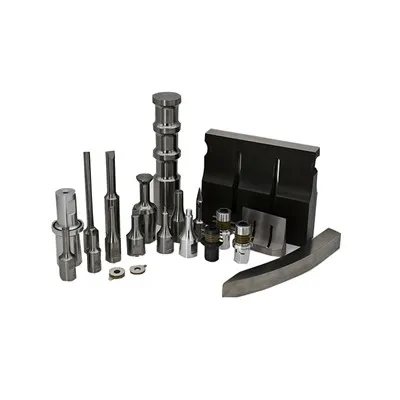
Ultrasonic Welding Horn: Ultrasonic welding tool head is a key component used in the ultrasonic welding process, whose main function is to transfer ultrasonic energy to the material to be welded. The shape and design of the tool head are usually customized based on the type of material being welded and the welding method. Common shapes include pointed, flat, round, etc.
Ultrasonic Cutting Blade: Ultrasonic cutting blade is a tool that uses ultrasonic technology for cutting. It converts electrical energy into high-frequency mechanical vibration through an ultrasonic transducer, transmits ultrasonic energy to the blade, and generates high-frequency vibration when cutting materials, thereby reducing cutting resistance and achieving precise cutting. Ultrasonic cutting blade can cut various materials, including plastic, rubber, fabric, food, etc
Ultrasonic Sonochemistry Emitter: Ultrasonic sonochemical emitter is a device that uses ultrasonic technology to generate high-frequency vibrations, thereby promoting chemical reactions or physical processes. In liquid, the vibration of ultrasound can generate tiny bubbles, forming acoustic cavitation phenomenon. These bubbles rapidly collapse under strong pressure changes, releasing a large amount of energy, thereby promoting chemical reactions and mixing of substances. Acoustic chemical emitters can significantly improve the rate, reactivity, and conversion rate of chemical reactions, enhancing reaction efficiency.
Ultrasonic Low-melt Metal Powder Disc: Ultrasonic Low-melt Metal Powder Disc is a device that uses ultrasonic technology to process metal materials into powder. It generates high-frequency vibration using ultrasonic transducers and transmits it to the metal milling disc. The high-frequency vibration intensifies the collision and friction of metal particles, thereby crushing large particles and forming fine metal powder.
Features and Functions of Ultrasonic High Frequency Driver for Atomization
The CNC power supply for ultrasonic atomization can control the working frequency of the ultrasonic atomizer by adjusting the frequency of the output voltage. This frequency is usually within the ultrasonic range and can be adjusted according to specific application requirements. Different frequencies of ultrasound can produce different atomization effects and particle size distributions.
The CNC power supply for ultrasonic atomization can adjust the amplitude of the output voltage, thereby controlling the vibration amplitude of the ultrasonic atomizer. This amplitude control can affect the energy output of ultrasound, thereby affecting the atomization effect and the size of atomized particles produced.
Ultrasonic atomization CNC power supply usually has the function of atomization effect adjustment, which can adjust the working parameters of the atomizer as needed, such as working time, cycle, and pulse mode, to achieve the desired atomization effect and particle size distribution.
Some advanced ultrasonic atomization CNC power supplies have temperature control functions, which can monitor and control the working temperature of the atomizer. This helps to avoid overheating and protect the stability and lifespan of the atomizer.
Some ultrasonic atomization CNC power supplies also have digital control interfaces, which can be remotely controlled and parameter adjusted through computers or other external devices. This digital control interface enhances the flexibility and convenience of operation.
Our Certifications

Our Factory
Established In 2018. It is a subsidiary of Hangzhou FUNSONIC Ultrasonic Technology Co.,Ltd. It is composed of several engineers with more than 20 years of practical experience in the field of high-power ultrasound. FUNSONIC focus on the development and manufacture of ultrasonic equipment, such as ultrasonic spray coating machine,ultrasonic nozzle spray shaping machine, ultrasonic welding equipment, ultrasonic cutting equipment, ultrasonic liquid processing equipment, various kinds of ultrasonic core components. Also we will provide customized services according to the needs of our customers.


FAQ
Hangzhou Shengtu Technology Co., Ltd. is one of the most professional ultrasonic components manufacturers and suppliers in China, featured by quality products and low price. Please rest assured to buy ultrasonic components for sale here from our factory. Also, customized service is available.
100Khz Ultrasonic High Frequency Driver for Atomization, 40Khz Ultrasound Intelligent Power Supply for Cutting Machine, NTK Type Ultrasonic Plastic Welding Converter