


Ultrasonic Spray Nozzle System
What is Ultrasonic Spray Nozzle System?
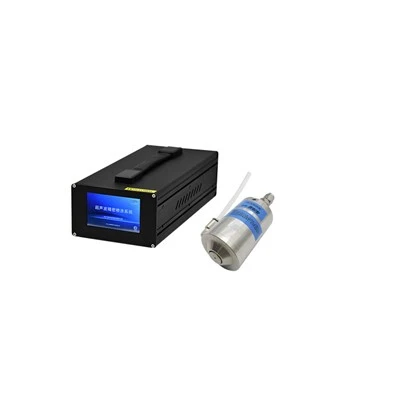
The ultrasonic atomizing nozzle breaks down the surface tension of the liquid by high-frequency vibration (frequency 20-200KHz) of the piezoelectric ceramic plate, dispersing the solution into small particles of 15-45 μ m. The working principle of ultrasonic atomizing nozzle is that the ultrasonic nozzle converts high-frequency sound waves into mechanical energy through a piezoelectric transducer, and then converts the mechanical energy into liquid. This longitudinal upward and downward vibration generates standing waves in the liquid film at the tip of the ultrasonic nozzle, where the amplitude of these waves can be controlled by a power generator. These stationary liquid waves can extend upwards from the top of the ultrasonic nozzle, and when the droplets leave the atomizing surface of the nozzle, they are decomposed into a uniform fine mist of micrometer sized droplets.




FUNSONIC Advantages
Customized product: With high flexibility in product customization, it provides users with scientifically feasible reference suggestions during the customization process.
The company is actively researching and developing new products, expanding its product range, and providing users with higher quality high-power ultrasonic equipment.
The product model has high reliability and short delivery time: the equipment can be mass-produced, and the supply cycle is short.
The solution involves full technical follow-up from testing to mass production, eliminating the hassle of repeatedly selecting suppliers.
Advantages of Ultrasonic Spray Nozzle System
Ultrasonic Spray Nozzles with Fine Particle Size
One of the significant advantages of ultrasonic spray nozzles is their ability to generate fine droplets with a small particle size. This fine particle size is essential in applications such as coating, painting, and drug delivery. Ultrasonic spray nozzles utilize high-frequency vibrations to atomize the liquid into extremely fine particles, resulting in better surface coverage and improved product quality.
Ultrasonic Spray Nozzles with Uniform Coating Distribution
Achieving a uniform coating distribution is crucial in industries such as electronics, automotive, and aerospace. Traditional spray nozzles often struggle to provide consistent coating thickness, leading to quality issues. Ultrasonic spray nozzles, on the other hand, excel in delivering a uniform coating across the surface. Ultrasonic spray nozzles produce a well-distributed mist, ensuring consistent and precise coating deposition.
Ultrasonic Spray Nozzles with Precise Control
Precision is a critical requirement in many applications, including pharmaceuticals, semiconductor manufacturing, and research laboratories. Ultrasonic spray nozzles offer precise control over droplet size, flow rate, and spray pattern. This level of control allows for accurate and targeted application, minimizing waste and improving overall efficiency. Ultrasonic spray nozzles provide advanced control mechanisms, enabling users to adjust and fine-tune spray parameters as per their specific needs.
Ultrasonic Spray Nozzles with Reduced Clogging and Maintenance
Traditional spray nozzles are prone to clogging, resulting in downtime and increased maintenance requirements. Ultrasonic spray nozzles, on the other hand, significantly reduce the occurrence of clogging. The high-frequency vibrations generated by ultrasonic spray nozzles prevent the buildup of deposits and ensure continuous, uninterrupted operation. This advantage translates to improved productivity and reduced maintenance costs for end-users.
Ultrasonic Spray Nozzles with Energy Efficiency
Energy efficiency is a growing concern in today's environmentally conscious world. Ultrasonic spray nozzles consume less energy compared to traditional spray nozzles, thanks to their efficient atomization process. Ultrasonic spray nozzles require minimal power input while delivering excellent performance. This energy-saving feature not only reduces operational costs but also contributes to a greener, more sustainable manufacturing process.
Types Of Ultrasonic Spray Nozzle System

WideMist Ultrasonic Nozzle
The Widemist ultrasonic nozzle has a relatively large width and is mainly suitable for various medium and large area spraying applications. It can be used for various applications such as float glass spraying, textile spraying, fuel cell spraying, proton exchange membrane spraying, membrane electrode spraying, metal plastic sheet, AR anti reflective spraying, thermal insulation film spraying, superhydrophobic coating spraying, flux spraying, etc.

Scattering Ultrasonic Nozzle
The scattering ultrasonic nozzle is an ultrasonic atomizing nozzle with a cyclone cone spray. A typical application is photoresist coating on semiconductor chips, where photoresist is sprayed onto the semiconductor chips. In addition, it can also be used for thin film solar cell coatings, perovskite cell coatings, AR transmission and reflection film coatings, thermal insulation film coatings, superhydrophobic coatings, PCB flux coatings and other applications.

AccuMist Ultrasonic Nozzle
The AccuMist ultrasonic nozzle is a kind of ultrasonic atomizing nozzle with small spray width. Due to the small spraying width of the AccuMist ultrasonic nozzle, it is mainly suitable for various small and medium-sized spraying applications. It complements the FUNSONIC WideMist ultrasonic nozzle and can be applied to almost all different flat spraying requirements.

Penetrate Ultrasonic Nozzle
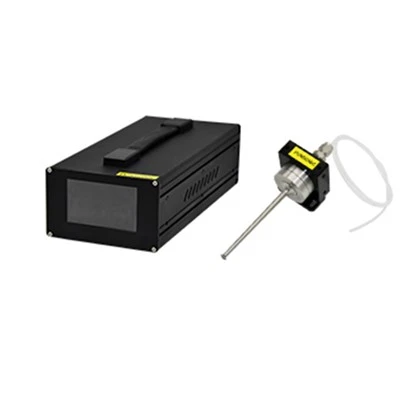
The penetrate type ultrasonic nozzle is an extended type of ultrasonic atomizing nozzle. It adopts ultrasonic atomization nozzle technology, and by extending the front end of the nozzle design, the ultrasonic nozzle is extended into a narrow space for spraying, mainly used for penetrating the inner wall of the pipeline for spraying applications. Typical applications include vacuum blood collection tube spraying and injector silicone oil spraying.

MicroMist Ultrasonic Nozzle
The focused ultrasonic atomizer nozzle of the MicroMist spray type is combined with low-pressure air/gas to produce a soft, highly focused small droplet beam. The isolated hypotube delivers the liquid to the atomization surface of the nozzle, while air/gas is delivered through the nozzle hole at a fixed low pressure to shape the atomized droplets into a very precise target jet with a diameter of only 0.020 inches (0.5mm).

Vortex Ultrasonic Nozzle
The vortex type ultrasonic nozzle produces a medium width spray pattern, which is wider than the gathering type ultrasonic nozzle, but narrower than the spray pattern of the wide type ultrasonic nozzle. It can form a wide "vortex like" dispersion, which is very suitable for coating flat objects such as PEM fuel cells and solar cells.
Application of Ultrasonic Spray Nozzle System
超声波喷嘴系统的应用


Medical Application:
Typical applications include vacuum blood collection tube spraying, injector silicone oil spraying, etc. The controlled ultrasonic nozzle can perform 5-10 head parallel ultrasonic spraying, with a distance of only 25mm between the two nozzles, and can be directly used in existing vacuum blood collection tube production lines. Combined with a specialized precision metering pump, the anticoagulant is evenly sprayed onto the inner wall of the vacuum blood collection tube, with a production speed of up to 12000 units per hour. It can also be used for spraying balloon catheters and stents.
Energy Applications:
Ultrasonic spray nozzles, energy applications, fuel cell manufacturing, solar cell coating, battery production, thin film coating, thin film deposition. Ultrasonic spray nozzles play a vital role in energy-related processes, such as fuel cell manufacturing, solar cell coating, membrane coating, and battery production. They enable a uniform distribution of materials, improve coating quality, and reduce material consumption. Ultrasonic spray nozzles provide high-frequency vibrations that allow for consistent, thin film deposition and enhance the efficiency and performance of energy devices.
Electronics Applications:
Ultrasonic spray nozzles, electronics applications, photoresist spray coating, deposition, adhesives, protective layers, fine-scale deposition. The electronics industry demands precise and controlled deposition of coatings, adhesives, and protective layers. Ultrasonic spray nozzles offer superior atomization and coating uniformity, ensuring accurate application and minimal waste. Ultrasonic spray nozzles provide high-frequency vibrations that enable fine-scale deposition, enabling the production of high-quality electronic components.
Nanomaterial Applications:
Ultrasonic spray nozzles, nanomaterial applications, nanomaterial synthesis, coating processes, droplet size control, homogeneous deposition. The production and manipulation of nanomaterials require precision and uniformity. Ultrasonic spray nozzles offer exceptional control over droplet size and distribution, making them ideal for nanomaterial synthesis and coating processes. Ultrasonic spray nozzles excel in generating a fine mist of nanomaterials, allowing for efficient and homogeneous deposition on various substrates.
Glass Applications:
Ultrasonic spray nozzles, glass applications, coating, scratch resistance, hydrophobic spray coating, durability, controlled coating thickness. In the glass industry, precise and uniform coating is essential for enhancing properties like scratch resistance, hydrophobicity, and durability. Ultrasonic spray nozzles provide an effective solution by ensuring a uniform application of coatings on glass surfaces. Ultrasonic spray nozzles offer high-frequency vibrations that aid in achieving a consistent and controlled coating thickness, resulting in superior glass products.
Manufacturing Applications:
Ultrasonic coating systems are most commonly used to coat the following films: Antimicrobial coatings, flavorings, sweeteners, nutritional supplements, etc. on prepared foods. Ultrasonic coating systems apply barrier coatings to packaging films and biodegradable containers. Ultrasonic coating systems are widely used to spray advanced high-performance coatings such as waterproof and oil-proof coatings, antibacterial and antifouling coatings onto textiles during the textile production process. Ultrasonic spraying technology is widely used in the automotive parts industry, mainly due to its advantages such as high precision, uniform coating and material saving.

Liquid Supply
A liquid is supplied to the nozzle through a conduit or tubing, which connects to a reservoir or a pump system.
Pressure Generation
The liquid is pressurized within the nozzle, either through a mechanical pump or by utilizing the pressure of the liquid source.
Orifice or Opening
The nozzle features a small orifice or opening through which the pressurized liquid is forced to pass.
Flow Restriction
As the liquid flows through the orifice, it encounters a flow restriction. This restriction causes an increase in velocity and a decrease in pressure, leading to the atomization of the liquid into small droplets.
Spray Pattern Control
The design and configuration of the nozzle determine the spray pattern, angle, and distribution of the atomized droplets. Different nozzle types, such as flat fan, round, or cone-shaped, offer various spray patterns to suit different application requirements.
How Ultrasonic Spray Nozzle Design Impacts Flow Rate
Ultrasonic spray nozzles unlike conventional air driven nozzles, do not rely on the force of air to break apart a liquid stream for atomization. Instead, atomization is created by an entirely different process. In the case of conventional air driven nozzles, flow rate or liquid velocity is largely driven by how much pressure (p.s.i.) is used in the system, i.e. the higher the air pressure, the higher the flow rate. Ultrasonic nozzles on the other hand are not necessarily dependent on air pressure for dictating flow rate. This obvious advantage of not needing air to create atomization is the resulting plume has little to no kinetic energy. Ultrasonic nozzles can be said to be airless systems under certain conditions.
When a liquid is pumped through an ultrasonic nozzle, it is critical that the flow rate not exceed the critical velocity of the nozzle design. The critical velocity is where the exiting liquid is unable to wet out properly onto the nozzle tip. In an extreme example, if the pump causes the nozzle in layman terms, to “pee-out,” the liquid velocity is far in excess of critical velocity. This condition will exist even with the nozzle powered off. More common, is a condition in which the critical velocity is only moderately exceeded. Resulting atomization is incomplete, where some liquid wets out and properly atomizes while other material is not atomized creating large droplets. For this reason, published flow rates per a given orifice size are provided that allow one to operate an ultrasonic nozzle within a safe margin of exceeding critical velocity.
Ultrasonic nozzles can be used with a variety of liquid delivery systems, such as syringe pumps, gear pumps, peristaltic pumps, pressure tanks and gravity fed reservoirs. Irrespective of the system that is used, as long as the liquid is delivered in a stead flow within the operational range of the nozzle any of these systems will work. Pulsation however should be avoided since a pulse can result in the liquid falling outside the operational range even if momentarily. This is especially pronounced with low flow applications such as stent coatings. It is not uncommon for a customer wanting to push a nozzle below its designed range which will result in less than ideal atomization and/or pulsation. Many customers find that using ultrasonic technology for the first time they use a lot less material due to the high transfer efficiencies of low velocity spray, thus less material needs to be dispensed.
Ultrasonic spray nozzles are devices that use high-frequency vibrations to produce fine droplets of liquid, which are then sprayed onto a surface. These nozzles are used in various applications such as coating, atomization, humidification, and cleaning, among others. They offer advantages like high precision, uniform distribution, reduced waste, and improved efficiency compared to conventional spray nozzles.
The global market for ultrasonic spray nozzles is expected to witness significant growth in the coming years. Factors driving this growth include increasing demand for advanced spraying technologies in industries such as electronics, automotive, healthcare, and food processing. The need for high precision and efficient spraying solutions, along with stringent environmental regulations, is also contributing to the market growth.
Moreover, the growing adoption of ultrasonic spray nozzles in the medical and pharmaceutical industries for drug delivery and precise coating applications is fueling the market expansion. The use of ultrasonic spray nozzles in the production of printed electronics, solar cells, and semiconductor devices is further boosting the market growth.
Additionally, advancements in ultrasonic spraying technologies, such as the integration of sensors, control systems, and automated functionalities, are expected to enhance the capabilities and efficiency of these nozzles, thereby driving market growth.
According to market research, the ultrasonic spray nozzles market is projected to grow at a high compound annual growth rate (CAGR) of % during the forecast period. With the rising demand for efficient and precise spraying solutions across various industries, the market is poised for substantial growth in the coming years.
What if the ultrasonic nozzle is blocked?
Ultrasonic nozzles are like faucets. If the solid content of the solution is high or the particles are large, it may cause blockage. So, how can we solve the problem of nozzle blockage? It is recommended to disassemble and clean the ultrasonic nozzle without affecting its use. FUNSONIC will provide a complete nozzle cleaning video for your reference.


What if the ultrasonic nozzle is damaged?
No matter what kind of item it is, after a certain period of use, problems will arise. The nozzle may be severely damaged during use due to various reasons. What should we do then?
If the ceramic chips are broken due to excessive temperature during actual operation, it is necessary to return to the factory for repair or replace the nozzle.
If the ultrasonic atomizing nozzle material reacts with the spraying material and is damaged during use, it is necessary to replace it with a product suitable for the spraying material.
We need to conduct a corresponding analysis of the damage to the ultrasonic nozzle and make modifications based on the actual situation to avoid further damage to the ultrasonic nozzle.
What Are the Questions to Ask Yourself Before Choosing a Ultrasonic Spray Nozzle?
What is the application?
Ultrasonic precision spraying coated equipment is mainly used in fuel cells, thin-film photovoltaic cells, thin-film solar coatings, perovskite solar cells, solar cells, graphene coatings, silicon photovoltaic cells, glass coatings, electronic circuits and other industries.
What is the available pressure?
A nozzle is a device that converts the energy from a fluid into the velocity of the spray droplets. The flow rate of a nozzle depends on the pressure. As a general rule, we can say that the higher the fluid pressure, the smaller the drop size. Depending upon the nozzle design, feed pressure variations may greatly influence the spray angle value.
What is the flow rate?
The flow rate affects the effectiveness of ultrasonic atomization, and it is necessary to adjust the amplitude of the ultrasonic generator at the set flow rate to ensure the atomization effect.
What is the desired nozzle material?
The most suitable material for a nozzle is one of the most crucial decisions since its operating life depends upon it. The choice of material directly depends on the operating conditions, i.e., the pressure, temperature, type of fluid used, and finally, the type of connection required. FUNSONIC nozzle body is made of titanium material, which has outstanding acoustic properties, high tensile strength, and excellent corrosion resistance. The protective shell is made of 304 stainless steel (titanium can also be chosen)
What is the piping material?
As for the nozzles, the piping system’s material is PTFE.
What are the connection types desired?
The connections of a nozzle are many and can influence the choice of one product or another. Nozzles are available with locknut connections, welding nipple, threaded nipple, metal or plastic clamp.
What liquid is being sprayed?
The nozzle can be applied to various solutions, even to sewage, chemical liquids, oil and viscous liquids, and can be atomized. Usually, it is required that the viscosity of the solution be less than 30 CPS, the solid content be less than 10%, and the particle size of the suspension be 10 microns.
What is the distance from the nozzle to the target?
The distance between the nozzle and the substrate is not fixed. Different nozzle types, flow rates, and spray widths will all affect the distance between the nozzle and the substrate.
What is the desired spray angle?
The spray angle is the angle formed by the cone of liquid that comes out of the orifice of a nozzle. The width of the spray angle and the distance between the orifice and the wet surface determine the spray coverage area.
What are the environmental conditions surrounding the nozzle?
If a nozzle is exposed to extreme temperatures, harsh environmental conditions, or sprays corrosive liquids, consider replacing it with one made of more durable material.
Our Certifications

Our Factory
FUNSONIC was established In 2018. It is composed of several engineers with more than 20 years of practical experience in the field of high-power ultrasound. FUNSONIC focus on the development and manufacture of ultrasonic equipment, such as ultrasonic spray coating machine,ultrasonic nozzle spray shaping machine, ultrasonic welding equipment, ultrasonic cutting equipment, ultrasonic liquid processing equipment, various kinds of ultrasonic core components. Also we will provide customized services according to the needs of our customers.


Ultimate FAQ Guide to Ultrasonic Spray Nozzle System
Q: What is an ultrasonic spray nozzle?
A: An ultrasonic spray nozzle is a device that uses ultrasonic vibrations to atomize liquid into a fine mist for spraying applications.
Q: How does an ultrasonic nozzle work?
A: Ultrasonic nozzles operate by converting high frequency sound waves into mechanical energy that is transferred into a liquid, creating standing waves. As the liquid exits the atomizing surface of the nozzle, it is broken into a fine mist of uniform micron sized droplets.
Q: What is the frequency of ultrasonic Nozzle?
A: At present, FUNSONIC company can supply ultrasonic spray nozzle with frequency 20khz, 25khz, 30khz, 40khz, 50khz, 60khz, 80khz, 100khz, 110khz, 120khz, 150khz, 180khz and so on. We can accept customized.
Q: Which types of ultrasonic Nozzle?
A: According to different application, FUNSONIC can provide WideMist Spray Nozzle, Scattering Spray Nozzle, AccuMist Spray Nozzle, Penetrator Spray Nozzle, MicroMist Spray Nozzle, Vortex spray nozzle and so on.
Q: What are the advantages of using ultrasonic spray nozzles?
A: Advantages include precise and uniform spray patterns, reduced liquid consumption, improved coating efficiency, reduced overspray, and the ability to coat delicate or irregularly shaped surfaces.
Q: What types of liquids can be sprayed with ultrasonic spray nozzles?
A: Ultrasonic spray nozzles can spray a wide range of liquids, including coatings, lubricants, adhesives, solvents, and more.
Q: What industries use ultrasonic spray nozzles?
A: Ultrasonic spray nozzles are used in industries such as Energy (Fuel Cell\Electrolyzer\Thin Film Solar Cell\Silicon Solar Cell\Polyimide Battery Layer etc), Nanomaterial (CTNs/Nanowires/Conductive Inks and other Nanomaterials/Ultrasonic Spray Drying),Electronic (Photoresist、Semiconductor、PCB Fluxin、Flip chip Fluxing), Medical (Drug Eluting Stent、Balloon Catheter、Blood Collection Tubes、Biosensors/Diagnostic Devices、Medical Textiles), Glass (Float Glass、Function Coatings、Protective Coatings、Lenses), Manufacturing (Food Manufacturing、Package、Textiles、Automotive Manufacturing) and so on.
Q: Do ultrasonic spray nozzles require regular maintenance?
A: Ultrasonic spray nozzles generally require minimal maintenance. Regular cleaning and inspection of the nozzle and transducer are recommended to ensure optimal performance.
Q: Are ultrasonic spray nozzles suitable for spraying corrosive liquids?
A: Ultrasonic spray nozzles can be made from materials resistant to corrosion, making them suitable for spraying corrosive liquids. However, compatibility should be verified with the specific liquid being used.
Q: What factors should be considered when selecting an ultrasonic spray nozzle?
A: Factors to consider include the desired droplet size, spray pattern, liquid viscosity, flow rate, operating frequency, compatibility with the liquid, and the specific application requirements.
Q: Are ultrasonic spray nozzles suitable for large-scale industrial applications?
A: Ultrasonic spray nozzles can be used for large-scale industrial applications. They can be integrated into automated systems and used in continuous or batch processing for coating and other spraying operations. However, the specific design and configuration of the ultrasonic spray system would depend on the requirements of the application and the scale of operation.
Q: Can ultrasonic spray nozzles be used for coating medical implants or devices?
A: Ultrasonic spray nozzles are suitable for coating medical implants or devices, offering precise and uniform deposition of coatings for enhanced performance and biocompatibility, such as, spray coating of anti stenosis drugs on balloon catheter stents.
Q: Can ultrasonic spray nozzles be used in explosive or hazardous environments?
A: Ultrasonic spray nozzles designed for use in explosive or hazardous environments are available. However, it is important to ensure that the nozzle is rated for the specific environment and meets safety requirements.
Q: What is the advantage of using ultrasonic spray nozzles over traditional spray nozzles?
A: Ultrasonic spray nozzles provide finer droplet sizes, uniform spray patterns, reduced overspray, improved coating efficiency, and the ability to spray onto delicate or irregular surfaces.
Hangzhou Shengtu Technology Co., Ltd. is one of the most professional ultrasonic spray nozzle system manufacturers and suppliers in China, featured by quality products and low price. Please rest assured to buy ultrasonic spray nozzle system for sale here from our factory. Also, customized service is available.
Ultrasonic Eddy Current Spray Coated Nozzles, 60K High Temperature Ultrasonic Spraying Technology Nebulizer, Ultrasonic Spray Nozzle System