


Ultrasonic Indium Coating
What is Ultrasonic Indium Coating?
Ultrasonic indium coating equipment, also known as target welding machine, is an industrial processing equipment that uses high-frequency vibration to achieve uniform coating of indium metal. Its core principle is to remove microbubbles at the welding or coating interface through ultrasonic energy, and promote the penetration of indium metal into the micro cavities on the substrate surface, thereby forming a strong bond without the need for solder flux. Usually used for coating indium on metal and non-metal surfaces such as traditional copper plates, ITO glass, and silicon dioxide.
Download Ultrasonic Indium Coating Machine Guides & Specifications
Get complete system parameters, indium coating process guides, and technical specifications for target bonding and sputtering applications in our comprehensive PDF catalogs.


y Choose Us?
FUNSONIC Advantages
Customized product: With high flexibility in product customization, it provides users with scientifically feasible reference suggestions during the customization process.
The company is actively researching and developing new products, expanding its product range, and providing users with higher quality high-power ultrasonic equipment.
The product model has high reliability and short delivery time: the equipment can be mass-produced, and the supply cycle is short.
The solution involves full technical follow-up from testing to mass production, eliminating the hassle of repeatedly selecting suppliers.
Technical Team Advantages
技术团队优势
Deep cooperation, research, development, and production with multiple well-known domestic universities, industry-leading research institutes, and enterprises.
01
The company has multiple engineering and technical personnel, each with over 10 years of ultrasonic practical experience, possessing strong technical skills and rich experience.
02
The team members are mainly born in the 1980s and 1990s, all of whom have a college degree or above. Has strong competitiveness and challenge, used for innovation, responsibility, and accountability.
03
Continuously strengthen company management, gradually establish competitive advantages, receive widespread praise from customers, and become an excellent enterprise.
04
The company's brand has a wide influence and a good brand reputation in the ultrasonic industry.
05
Advantages of Ultrasonic Indium Coating
Uniform coating thickness
Ultrasonic indium coating ensures a highly uniform and consistent coating thickness, even on complex or irregularly shaped surfaces. This uniformity is crucial in applications where precise control over the coating thickness is required.
Enhanced adhesion
Ultrasonic atomization and deposition of indium results in improved adhesion of the coating to the substrate. The ultrasonic energy promotes good wetting and bonding between the indium particles and the substrate surface, leading to stronger adhesion and reduced risk of coating delamination.
High coating quality
Ultrasonic indium coating produces a high-quality coating with excellent surface coverage and minimal defects such as pinholes or voids. This is especially important in applications where the coating acts as a protective barrier or provides specific electrical or thermal properties.
Reduced material waste
Ultrasonic atomization allows for precise control over the amount of indium material used for coating. This reduces material waste and improves overall process efficiency, making it a cost-effective solution.
Enhanced process efficiency
Ultrasonic indium coating offers increased process efficiency due to the ability to achieve higher deposition rates and faster coating speeds compared to traditional coating methods. This is particularly advantageous in large-scale production environments.
Compatibility with delicate substrates
Ultrasonic indium coating is suitable for delicate or sensitive substrates that may be prone to damage or deformation with other coating techniques. The gentle atomization and deposition process minimize the risk of substrate damage.
Versatility
Ultrasonic indium coating can be applied to a wide range of substrates, including metals, ceramics, glass, and polymers. It finds applications in industries such as electronics, optics, aerospace, and automotive, where indium coatings are used for their electrical conductivity, thermal management, corrosion resistance, and solderability properties.
Types of Ultrasonic Indium Coating
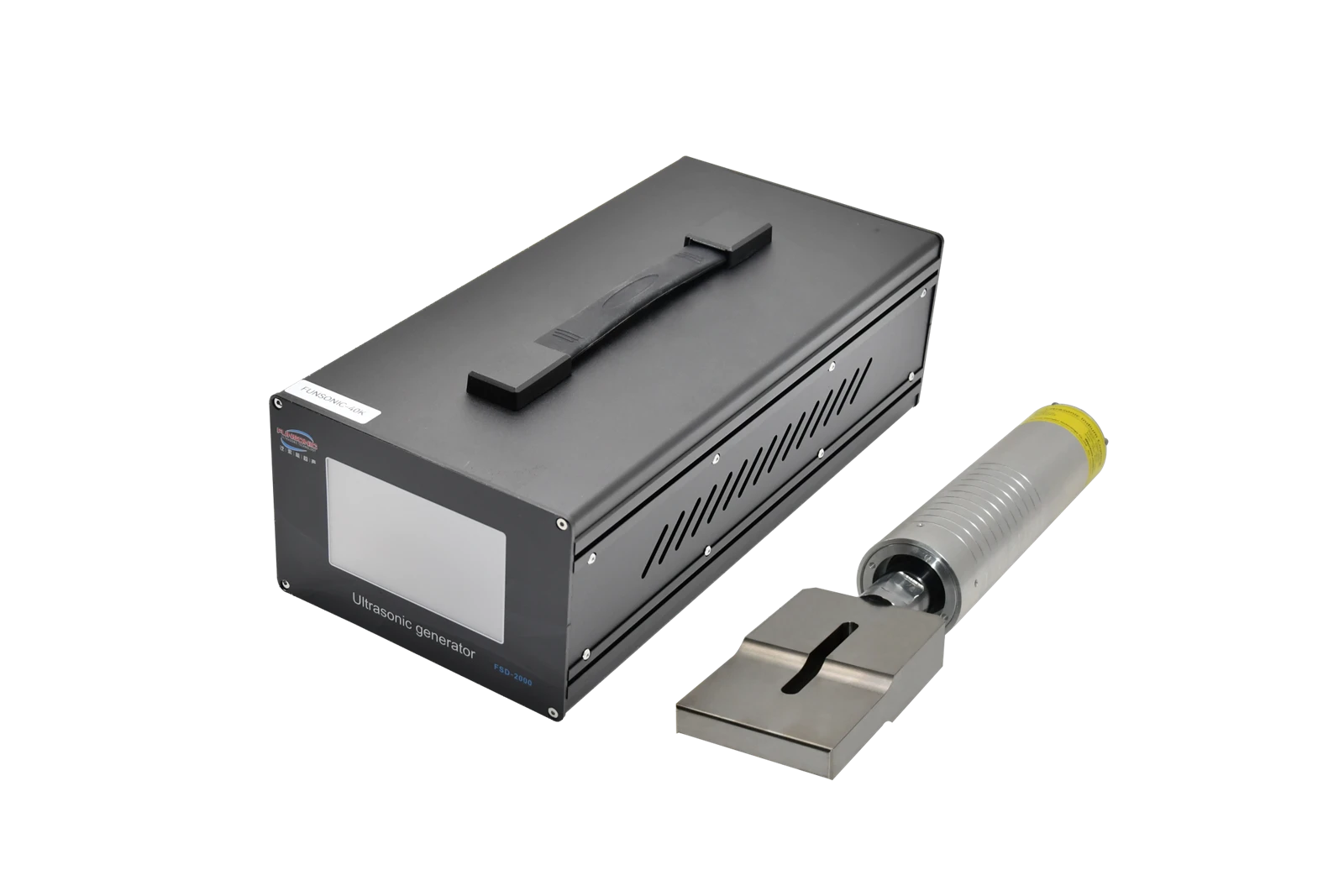
Ultrasonic Planar Indium Coating Machine
Ultrasonic flat indium coating machine is an automated equipment specially used to evenly coat indium metal on the surface of flat materials (such as copper plates, ITO glass, silicon dioxide, etc.). It uses high-frequency ultrasonic vibration technology to replace the traditional manual scraping process and is widely used in ITO target manufacturing, semiconductors, solar cells, electronic components and other fields. The equipment can achieve flux-free welding, improve coating uniformity and adhesion, and improve production efficiency and environmental protection.

Ultrasonic Outer Circle Indium Coating Machine
Ultrasonic Outer Circle indium coating machine (also known as arc target ultrasonic indium coating machine) is a device dedicated to uniformly coating indium metal on the outer wall of tubular target materials. It is a type of ultrasonic target welding technology and is suitable for indium coating processes of cylindrical materials such as ITO targets, copper tubes, and aluminum tubes. The equipment achieves flux-free welding through high-frequency ultrasonic vibration, replacing traditional manual scraping technology, and is widely used in semiconductors, solar cells, aerospace and other fields.

Ultrasonic Inner Circle Indium Coating Machine
Ultrasonic inner circle coating of indium is a method of coating indium on the inner surface of tubular or cylindrical substrates using ultrasonic technology. The indium coating solution for ultrasonic inner circle coating usually contains indium salts and reducing agents, and the concentration and proportion of the solution's components can be adjusted according to specific requirements. Using ultrasonic indium coating equipment, uniformly cover the inner surface of the substrate through ultrasonic vibration and fluid flow of the indium coating solution. And according to the required thickness of indium coating, control the time and cycle times of indium coating to complete ultrasonic indium coating.
Application of Ultrasonic Indium Coating
Semiconductor industry
Ultrasonic indium coating machines can be used to manufacture high-power germanium rectifiers, welding leads of germanium transistors and additive elements of semiconductor materials. This is because indium has the characteristics of enhancing the wear resistance of bearings, resisting organic acid corrosion and maintaining oil films, and plays an important role in the semiconductor manufacturing process.
Aerospace technology
In engines of aircraft, ships, etc., manufacturing indium-plated high-speed bearings is a very critical link. Ultrasonic indium coaters can be used to evenly apply a layer of indium on these engine parts to improve their wear resistance and performance.
Solar cells
With the continuous development of solar energy technology, ultrasonic indium coating machines are also used in solar cell manufacturing. For example, in the manufacturing process, indium can be used to make transparent conductive films to improve the photoelectric conversion efficiency of solar cells.
Target manufacturing
Ultrasonic indium coating machine is one of the important equipment in the target manufacturing process. The target is a key component in manufacturing various thin film materials, and the ultrasonic indium coater can be used to evenly apply an indium layer on the target to improve its performance and service life.
Reference Factors of Ultrasonic Indium Coating Machine


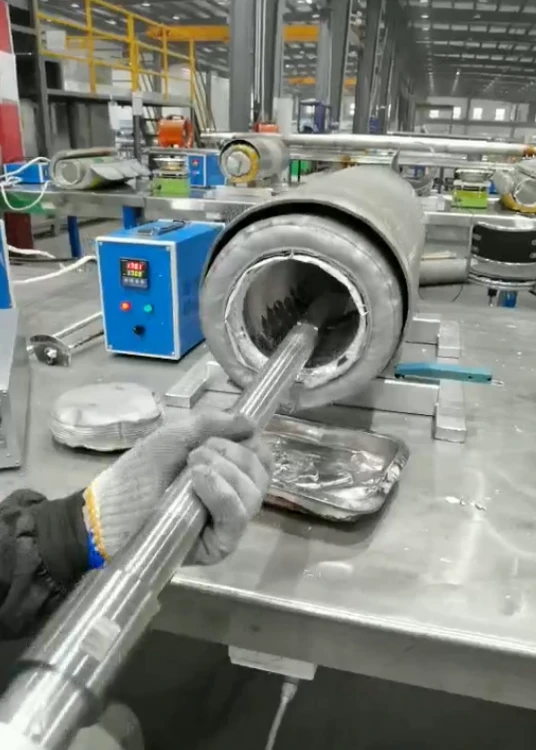
Coating Technology
Ultrasonic indium coating machines usually use brush coating technology for coating. Brush coating technology uses ultrasonic tool heads to apply coating liquid onto the outer surface of objects. The selection of the appropriate coating tool head depends on the specific application requirements and the geometric shape of the object.
Coating Parameters
In the ultrasonic indium coating machine, it is very important to adjust the coating parameters to obtain good coating effect. These parameters include the frequency, amplitude, coating speed, coating thickness, and viscosity of the coating solution of ultrasonic vibration. By adjusting these parameters, it is possible to achieve coating of different types of objects and ensure the quality and uniformity of the coating.
Material Selection
Ultrasonic indium coating machine can be used to coat various materials, including metals, plastics, ceramics, etc. The indium material in the coating solution can be indium compounds, which can be selected according to specific application requirements and demands.
Application Field
Ultrasonic indium coating machine has been applied in many fields. For example, in the petroleum and chemical industries, it can be used as an internal coating for pipelines and fittings to improve their corrosion resistance. In the automotive manufacturing industry, it can be applied to the inner ring coating of engine components to improve their wear resistance and high temperature resistance. In addition, the ultrasonic indium coating machine can also be used in fields such as electronic components and aerospace.
Coating Quality Control
To ensure consistency and compliance of coating quality, ultrasonic indium coating machines are typically equipped with coating quality control systems. This system can monitor parameters such as coating fluid flow rate, coating thickness, and coating uniformity, and provide real-time feedback and adjustment to ensure the quality and stability of the coating.
Characteristics of Ultrasonic Indium Coating Machine
Uniformity
Ultrasonic indium coating machine can achieve highly uniform coating effect. Ultrasonic vibration can ensure the uniform dispersion of indium material in the coating solution and form a uniform coating on the target surface, thereby obtaining stable and high-quality coatings.
Efficiency
The ultrasonic indium coating machine has the characteristics of fast coating speed and high coating efficiency. Ultrasonic vibration can promote the formation and adhesion of droplets in the plating solution, achieving a fast and efficient coating process.
Wide Applicability
Ultrasonic indium coating machine can be used for different types of materials and surface coatings. It is suitable for coating various materials such as metals, ceramics, plastics, etc., and can be applied in multiple fields such as electronics, optics, and medicine.
Easy to Operate and Control
Ultrasonic indium coating machines usually have a simple and easy-to-use operating interface and control system. Operators can easily adjust coating parameters, such as vibration frequency, coating speed, and coating thickness, to meet different coating requirements.
Ultrasonic Indium Coating Processing Steps
Firstly, prepare the substrate to be coated with indium. This may involve cleaning, polishing, or other surface treatment steps to ensure the flatness and cleanliness of the substrate surface.
Prepare the solution required for indium coating. Indium coating solution usually contains indium salts and reducing agents. According to specific indium coating requirements, the concentration and ratio of components in the solution can be adjusted.
Set up the ultrasonic indium coating equipment and adjust the relevant parameters. This may include ultrasonic frequency, amplitude, flow rate of indium coating solution, and spraying angle. According to the size and shape of the substrate, the equipment needs to be adjusted to ensure that the indium coating liquid evenly covers the surface of the substrate.
Place the substrate in an ultrasonic indium coating device, start ultrasonic vibration, and spray the indium coating solution onto the outer surface of the substrate. The vibration of ultrasound and the flow of indium coating solution will help to evenly distribute the indium coating solution on the substrate surface and promote the deposition of indium.
The indium material in the coating solution will be sprayed or brushed onto the outer surface of the object through the coating device under the action of ultrasonic vibration. Due to the eddy current effect and small vibrations of ultrasound, indium droplets in the coating solution will be uniformly distributed and attached to the outer surface of the object, forming a uniform coating.
Post Treatment of Indium Coating
After completing the indium coating, subsequent processing steps such as washing, drying, or curing may be required to ensure the quality and adhesion of the indium coating layer.
Parts of Ultrasonic Indium Coating
Ultrasonic Generator
CNC power supply, generating high-frequency ultrasonic vibration.
Indium Coating Tank
a container that holds the material to be processed and the indium coating solution, usually made of corrosion-resistant materials.
Indium Coating Solution
a solution containing indium salts and other additives used to form indium coatings.
Ultrasonic Oscillator and Tool Head
Transfer ultrasonic energy to the indium coating solution to promote uniform indium coating.
Power and Control System
controls the operation and parameters of the ultrasonic generator and other key components.
Our Certifications

Our Factory
FUNSONIC was established In 2018. It is composed of several engineers with more than 20 years of practical experience in the field of high-power ultrasound. FUNSONIC focus on the development and manufacture of ultrasonic equipment, such as ultrasonic spray coating machine,ultrasonic nozzle spray shaping machine, ultrasonic welding equipment, ultrasonic cutting equipment, ultrasonic liquid processing equipment, various kinds of ultrasonic core components. Also we will provide customized services according to the needs of our customers.


Ultimate FAQ Guide To Ultrasonic Indium Coating
Hangzhou Shengtu Technology Co., Ltd. is one of the most professional ultrasonic indium coating manufacturers and suppliers in China, featured by quality products and low price. Please rest assured to buy ultrasonic indium coating for sale here from our factory. Also, customized service is available.
20Khz 1000W Ultrasonic Flat Indium Coating Device, Manufacturing Superconducting Magnets By Ultrasonic Indium Coating, 20Khz New Scraping Technology By Ultrasonic Indium Coating Equipment