

What is the principle behind ultrasonic liquid processing?
Ultrasonic liquid processing is a fascinating technology that has revolutionized various industries, from food and beverage to pharmaceuticals and materials science. As a supplier of ultrasonic liquid processing equipment, I've had the privilege of witnessing firsthand the incredible potential of this technology. In this blog post, I'll break down the principle behind ultrasonic liquid processing, explain how it works, and share some real - world applications.
The Basics of Ultrasonic Waves
Let's start with the basics. Ultrasonic waves are sound waves with a frequency higher than the upper limit of human hearing, which is generally considered to be around 20,000 hertz (Hz). In ultrasonic liquid processing, we typically use frequencies ranging from 20,000 Hz to several megahertz.
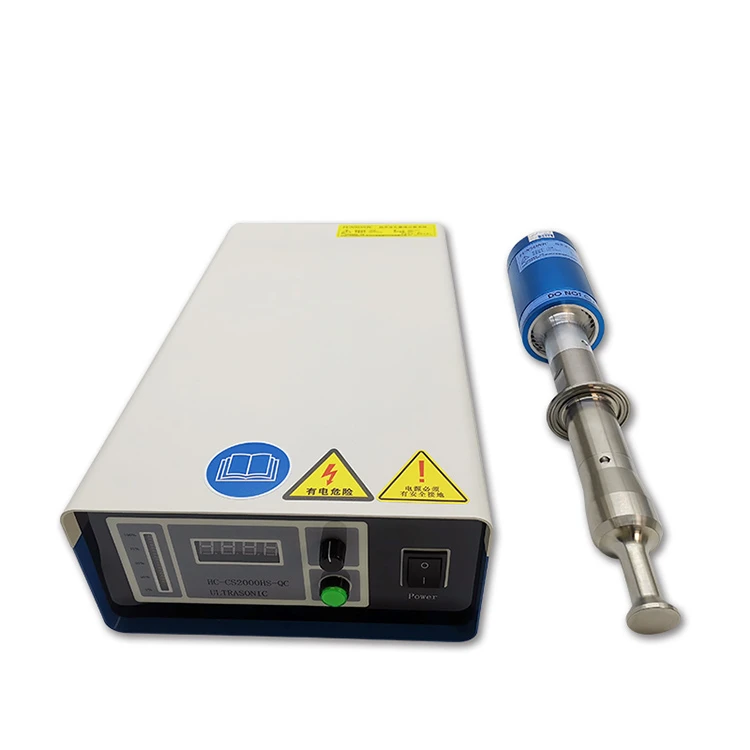
These high - frequency sound waves are generated by an ultrasonic transducer. The transducer is like the heart of the ultrasonic liquid processing system. It converts electrical energy into mechanical vibrations, which then create the ultrasonic waves in the liquid.
The Principle of Cavitation
The key principle behind ultrasonic liquid processing is cavitation. Cavitation is the formation, growth, and collapse of tiny gas bubbles in a liquid. When ultrasonic waves pass through a liquid, they create areas of high and low pressure. During the low - pressure phase, the pressure in the liquid drops below the vapor pressure of the liquid, causing small gas bubbles to form. These bubbles are called cavitation bubbles.
As the ultrasonic waves continue to propagate, the cavitation bubbles grow in size. Then, during the high - pressure phase, the bubbles are compressed and ultimately collapse. This collapse is an extremely violent event. It releases a tremendous amount of energy in the form of shock waves, high - speed jets of liquid, and local heating.
How Cavitation Affects Liquids
The energy released during cavitation has several effects on the liquid and any substances suspended in it.
Mixing and Dispersion
One of the most common applications of ultrasonic liquid processing is mixing and dispersion. The shock waves and high - speed jets created by cavitation can break up large particles and agglomerates in a liquid. For example, if you have a suspension of solid particles in a liquid, the cavitation can disperse these particles evenly throughout the liquid, creating a more homogeneous mixture. This is extremely useful in industries like paint and coatings, where a uniform dispersion of pigments is crucial for the quality of the final product. Check out our 20Khz Ultrasonic Coating Efficient Suspension Dispersion for more information on how our equipment can achieve this.
Emulsification
Ultrasonic cavitation can also be used for emulsification. An emulsion is a mixture of two immiscible liquids, such as oil and water. The energy from cavitation can break the oil droplets into smaller sizes and disperse them in the water phase, creating a stable emulsion. This is widely used in the food and beverage industry, for example, to make mayonnaise or salad dressings.

Extraction
Another important application is extraction. When ultrasonic waves are applied to a plant material or other solid matrix in a liquid, the cavitation can break open the cell walls and release the desired compounds. This can significantly increase the extraction efficiency and reduce the extraction time. Our 20Khz Ultrasonic Experimental Extraction Device is designed specifically for such extraction processes, whether it's extracting essential oils from plants or bioactive compounds from herbs.
Sonochemistry
Cavitation also plays a key role in sonochemistry. The high temperatures and pressures generated during the collapse of cavitation bubbles can initiate chemical reactions that might not occur under normal conditions. This can be used to synthesize new materials, break down pollutants, or modify the properties of existing substances. Our Ultrasound Cavitation Sonochemistry Experimental Grade Liquid Treatment provides a platform for researchers and industries to explore these sonochemical reactions.
Factors Affecting Ultrasonic Liquid Processing
Several factors can affect the efficiency of ultrasonic liquid processing.
Frequency
The frequency of the ultrasonic waves is an important factor. Different frequencies have different effects on the liquid. Lower frequencies (around 20 - 40 kHz) generally produce larger cavitation bubbles and more intense shock waves, which are better for applications like extraction and mixing. Higher frequencies (above 100 kHz) produce smaller bubbles and are more suitable for applications like emulsification and sonochemistry.
Power
The power of the ultrasonic system also matters. Higher power levels can increase the intensity of cavitation, but there's a limit. If the power is too high, it can cause excessive heating of the liquid and damage the ultrasonic transducer.
Liquid Properties
The properties of the liquid, such as viscosity, density, and surface tension, can also affect cavitation. For example, a more viscous liquid will require more energy to form cavitation bubbles.
Real - World Applications
Ultrasonic liquid processing has a wide range of real - world applications.
In the pharmaceutical industry, it's used for drug formulation, such as preparing nanoparticles for targeted drug delivery. The ability to create uniform particle sizes and stable suspensions is crucial for the effectiveness of these drugs.
In the food industry, as mentioned earlier, it's used for emulsification, extraction of flavors and nutrients, and even for improving the texture of food products.
In the environmental sector, ultrasonic liquid processing can be used to break down pollutants in water and soil. The sonochemical reactions can transform harmful substances into less toxic or even harmless compounds.
Why Choose Our Ultrasonic Liquid Processing Equipment
As a supplier of ultrasonic liquid processing equipment, we offer several advantages. Our equipment is designed with the latest technology to ensure high - efficiency cavitation. We use high - quality transducers that can generate consistent and powerful ultrasonic waves.
We also provide customized solutions. Every industry and every application has its own unique requirements. Whether you need a small - scale experimental device or a large - scale industrial system, we can tailor our equipment to meet your specific needs.
Let's Connect
If you're interested in learning more about ultrasonic liquid processing or are considering purchasing our equipment, I'd love to hear from you. You can reach out to us to discuss your requirements, and we can provide you with detailed information about our products and how they can benefit your business.
References
- Mason, T. J., & Lorimer, J. P. (2002). Sonochemistry: Theory, Applications and Uses of Ultrasound in Chemistry. Royal Society of Chemistry.
- Suslick, K. S. (1990). Sonochemistry. Science, 247(4947), 1439 - 1445.
- Povey, M. J. W., & Mason, T. J. (1998). Ultrasonics in Food Processing. CRC Press.