

Ultrasonic Spraying Technology for Solar Cell Coatings

Ultrasonic spraying technology is used for photovoltaic crystalline silicon (c-Si) and thin film applications. Compared with chemical vapor deposition (CVD), sputtering, spin coating, roll coating, and mist coating techniques, ultrasonic spraying technology can be a more cost-effective method for depositing thin film coatings on solar cells. Due to the high uniformity of atomized droplets and their low speed during the coating process, highly uniform micrometer thick layers can be formed on c-Si and thin-film solar cells. The additional benefit of reducing waste or overspray can also significantly save materials.
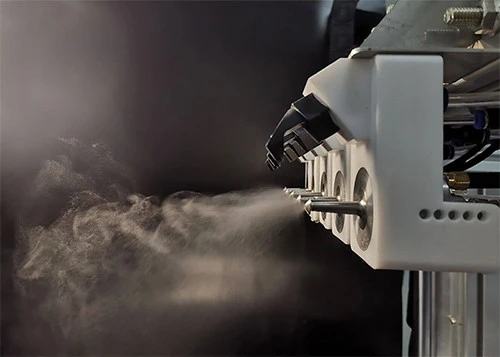
Ultrasonic spraying technology is used for the following chemicals:
Doping agents, absorbents, buffering agents, organic compounds, etc
Boric acid dopant
Cadmium chloride (CdTe) absorbent
Cadmium sulfide (CdS) - buffer layer for CIGS and CdTe batteries
Copper Indium Gallium Selenide (CIGS or CIS) Absorbent
Copper Zinc Tin Sulfide (CZTS) Absorbent
Dye sensitized organic solar cells (DSC, DSSC or DYSC)
P3HT
PEDOT
PCBM
Phosphate based dopants in emitter formation
Quantum dots (QD)
Ultrasonic spraying has been successfully used to spray various quantum dots. ZnO thin films and CdS quantum dots have been prepared by ultrasonic spray pyrolysis deposition technology, and the cost is only a small part of CVD and sputtering methods.
Transparent conductive oxide (TCO)
Tin dioxide (SnO2)
Indium tin oxide (ITO)
Zinc oxide (ZnO) as nanowires in DSC applications
Carbon nanotubes (CNT)
Silver nanowires (AGNW)
Graphene
Anti reflective (AR) coating
silicon dioxide
titania


