

Ultrasonic Seamless Sewing and Welding - applied to Non-woven Fabrics

Non woven fabrics are composed of single fibers or endless filaments (infinitely long fibers) that form a loose cohesive force. Ultrasonic welding can be used to weld non-woven fabrics with thermoplastic components (plastic formed when heated). Here, the plastic part of the material is heated and melted by ultrasonic waves, and non-woven fabric can be connected together (welded) without adhesive.
What is suitable for?
Non woven fabrics without additives are very suitable for hygiene products, medical engineering, cosmetics, and health products. Ultrasonic welding is used for:
1. Press different layers together (such as diapers)
2. Combining embossed structures (such as for cosmetic cotton)
3. Separation and edging of edge areas (such as disposable gloves)
4. Perforated mesh material (e.g. used for filtering materials)

Ultrasonic welding seamless sewing machine can perform embossing, perforation, compaction, and cutting on non-woven materials. Using a rotating tool for bonding, they can achieve highly consistent connections on non-woven fabrics at speeds of up to 800 meters per minute (2625 feet per minute). Ultrasonic welding of fabrics eliminates the need for adhesives, thereby preventing any bonding confusion and avoiding potential product damage and cleaning downtime.
Ultimately, the products produced by these ultrasonic welding fabric machines have a soft touch and do not irritate the skin. Eliminating seams can also give the material greater elasticity, thereby improving fit and comfort.
How does it work?
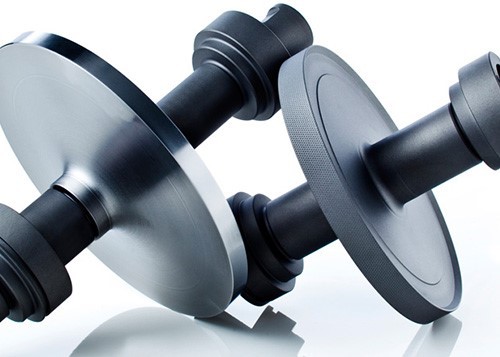
Ultrasonic waves are generated in the generator and converted into mechanical vibrations in the converter. These are introduced into the material through ultrasonic welding electrodes. The standard frequency here is between 20 and 35 kHz, with an amplitude of 10 to 50 μ m. The plastic part of the material is stimulated, heated, and melted. The actual welding process is fast: due to the use of rotating tools such as anvil drums, up to 800 meters of non-woven fabric can be processed per minute. The anvil drum is used as an anvil and has a separate surface structure to precisely focus ultrasonic energy. This can achieve precise welding, embossing, or cutting effects.
A constant distance between the processed material and the tool is important for achieving optimal results. This is ensured through precise control technology. It ensures that the distance remains constant, even if the welding tool changes due to the heat generated during the welding process.

Welding/cross sealing
Non woven fabrics can also be welded with cross sealing. Like longitudinal sealing, the welding head works in a fixed position and does not move up or down. The rotating anvil is a unique feature. It ensures that the non-woven fabric is in contact with the ultrasonic welding electrode at the correct position and is only welded there in the transverse direction. For example, this is used for the side seams of diapers.
Lamination
Unlike longitudinal sealing, the structure on the rotating anvil means that the non-woven fabric is only locally connected. The advantage of doing so is that due to many target connections, the material properties remain unchanged. For example, the filtering function is not affected and the material remains elastic.
Embossing
During the embossing process, non-woven fabrics (such as cotton pads) have a unique structure that is pressed into them. This is accomplished by the anvil drum. The particularity of the joined material when it has different colors: the color of the lower track can be seen at the weld seam. A design effect, such as a logo - without the need for additional color printing.
Perforation
Non woven fabrics can also be punched according to specified patterns. Materials can be lightly perforated using ultrasound and anvil drums, for example, in the case of wound dressings and ointments.
Cutting
Ultrasonic tools can even cut. Meanwhile, the cutting edge is sealed. For example, this is used to produce disposable gloves.
Advantage:
1. Low energy cost, ultrasonic seamless sewing tools do not require heating
2. No adhesive contamination - saving processing and maintenance costs
3. Production speed up to 800 m/min, reliable welding quality
4. Manufacturing technology for high-quality products with consistent material properties and optimal hand feel
5. High stability: When using ultrasonic seamless sewing, the rotation of the welding roller and the pressure roller is completely synchronized, with no difference in speed and angle, which will not cause fabric stretching or deformation, and the accuracy is extremely high. Due to the hot melt effect, needles and threads are not required, resulting in increased water resistance, lighter weight, and easier folding of the product.
6. Welding and cutting synchronization: Ultrasonic seamless sewing equipment is not only suitable for continuous sewing, but also for cutting textiles while welding, achieving automatic edge sealing.
7. Controllable welding: Welding rollers and pressure rollers pull the fabric, and ultrasonic welding of the fabric. Replacing the pressure roller can change the size and embossing of the weld seam, making it more flexible and convenient to use.
8. Widely applicable: All thermoplastic (softened after heating) fabrics, specialized tapes, and films can be welded using ultrasonic seamless sewing equipment, and the rollers are made of quenched steel to extend their service life.


